
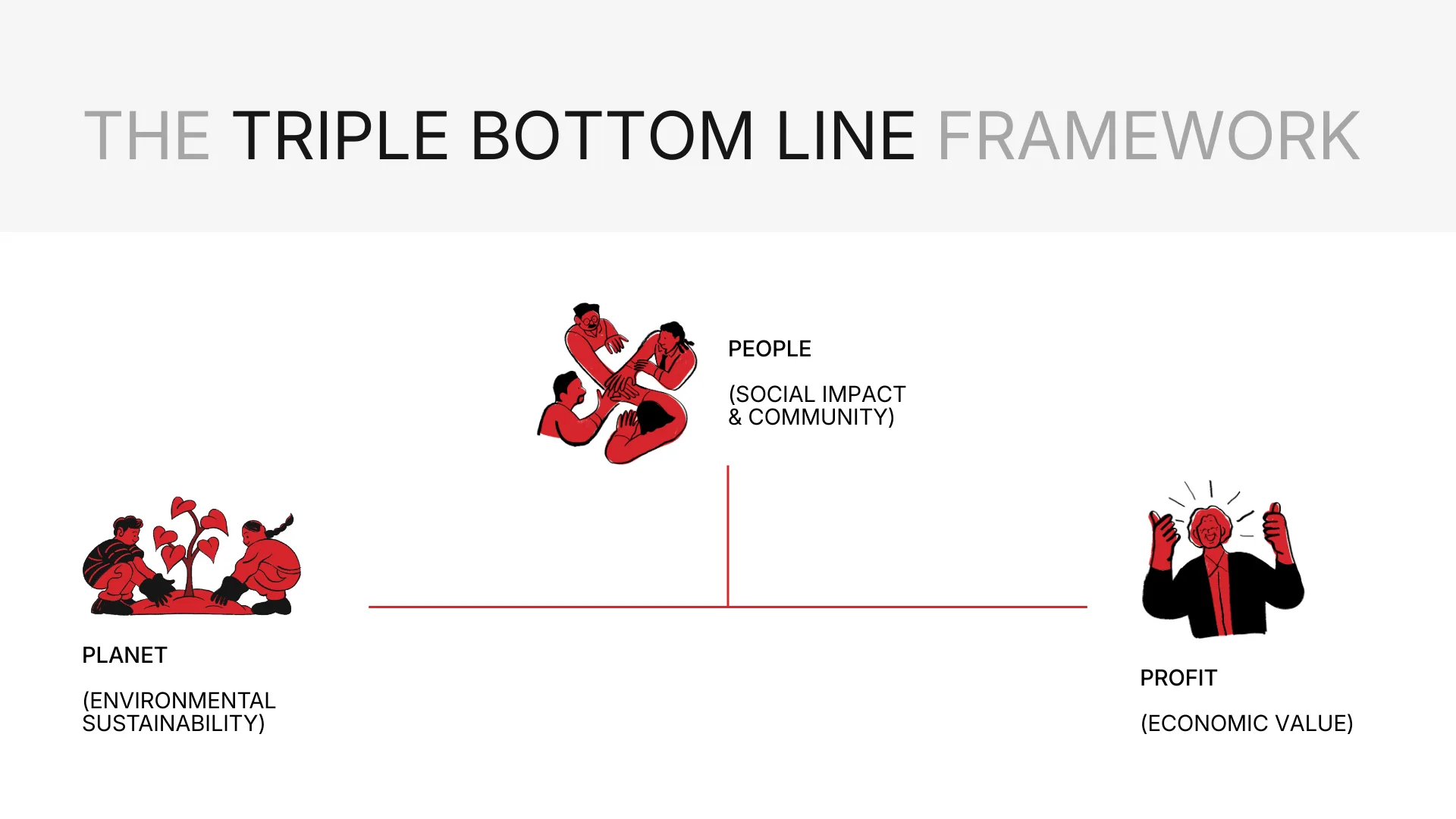
These three pillars work together. When balanced effectively, they create organizations that are not only profitable but also responsible contributors to society and the environment.
People: Creating Positive Social Impact
The first pillar of the Triple Bottom Line focuses on people. This refers to the social impact a company creates for employees, communities, customers, and society at large.
Mission-driven companies often begin here. They aim to address challenges such as education access, healthcare equity, economic inclusion, or community empowerment.
Research from Nielsen shows that over 70 percent of global consumers prefer brands that demonstrate social responsibility, and younger generations especially expect businesses to contribute positively to society.
For startups, prioritizing the “people” dimension may involve creating fair employment practices, supporting underserved communities, ensuring ethical supply chains, or designing products that solve meaningful social problems.
However, social impact must move beyond marketing claims. Companies must track measurable improvements in the lives of the people they serve.
Planet: Protecting Environmental Sustainability
The second pillar addresses environmental responsibility. Companies must consider how their operations affect the planet, including carbon emissions, resource consumption, waste generation, and supply chain practices.
Climate change and environmental degradation have made sustainability a business priority rather than an optional initiative. According to the World Economic Forum, environmental risks consistently rank among the top global threats to economic stability.
Mission-driven startups can contribute to environmental sustainability through innovations in renewable energy, sustainable agriculture, circular economy models, eco-friendly materials, and responsible manufacturing practices.
Even companies outside traditional “green industries” can integrate sustainability by reducing operational waste, improving energy efficiency, and designing products with longer lifecycles.
The planet pillar ensures that business growth does not come at the cost of environmental degradation.
Profit: Ensuring Financial Sustainability
The third pillar is profit, but in the Triple Bottom Line framework profit is not viewed as the sole objective. Instead, it is the engine that sustains long-term impact.
Mission-driven companies must remain financially viable if they hope to scale their solutions. Without sustainable revenue models, even the most well-intentioned ventures struggle to survive.
The rise of impact investing, which now represents more than one trillion dollars in global assets under management according to the Global Impact Investing Network, demonstrates that investors increasingly seek companies that combine financial returns with measurable social and environmental outcomes.
Profit in this framework therefore supports impact. Revenue enables innovation, expansion, and the ability to serve more communities.
How the Triple Bottom Line Benefits Mission-Driven Companies
For mission-driven organizations, the Triple Bottom Line acts as a strategic compass. It helps founders design businesses where impact and profitability reinforce each other rather than compete.
Companies that integrate this framework often build stronger credibility with investors, partners, and communities because they can clearly demonstrate how their operations benefit people and the planet while remaining financially viable.
The framework also encourages better decision-making. When evaluating new strategies, partnerships, or products, leaders can assess how each decision affects all three pillars. This holistic perspective prevents short-term gains from undermining long-term mission goals.
Additionally, organizations that adopt the Triple Bottom Line often attract purpose-driven talent. Employees increasingly want to work for companies that contribute positively to society. When teams understand how their work connects to meaningful outcomes, engagement and motivation increase.
How GMI Uses the Triple Bottom Line
At Global Mission Institute (GMI), the Triple Bottom Line serves as an important framework for guiding mission-driven companies toward scalable and measurable impact.
Many founders begin with a powerful purpose but lack a structured approach to balancing social impact, environmental responsibility, and financial sustainability. GMI works with entrepreneurs to design strategies where these three elements reinforce each other.
Through mentorship, strategic frameworks, and collaborative partnerships, GMI encourages companies to evaluate how their business activities affect communities, ecosystems, and economic sustainability simultaneously.
This approach helps mission-driven companies move beyond traditional profit-centric models and instead build enterprises that create value across multiple dimensions.
The goal is not simply to launch companies with strong missions. It is to build organizations capable of sustaining and scaling their impact over time.
SHARE